
How to Finish Third
Racing sailboats, product work, and operating without certainty

The first time someone corrected me on the boat, I was trimming the spinnaker wrong.
Not dramatically wrong—I wasn’t about to capsize us or rip the sail. Just... wrong enough that the guy on the bow had to yell back to me over the wind. “Ease it! EASE IT—no, more. There!”
I nodded, adjusted, tried not to look like I was second-guessing every single thing I thought I knew about racing with over a decade of experience.
It was March 2024, and I was standing in the cockpit of a Beneteau First 36.7 five nautical miles off the coast of St. Martin. If you’ve never seen one, it’s about 40 feet long, sleeps six uncomfortably, and is built for racing rather than Instagram photos. And I was sharing it with nine strangers I’d met on the internet—five Brits who’d been sailing together for twenty years, two Canadians, and another British couple who seemed equally uncertain about whether this had been a good idea.
The wind was steady at 15 knots. The chop was three to six feet. My sea legs—which I hadn’t needed since 2017—were not cooperating. And I kept thinking: Oh no. What have I gotten myself into?
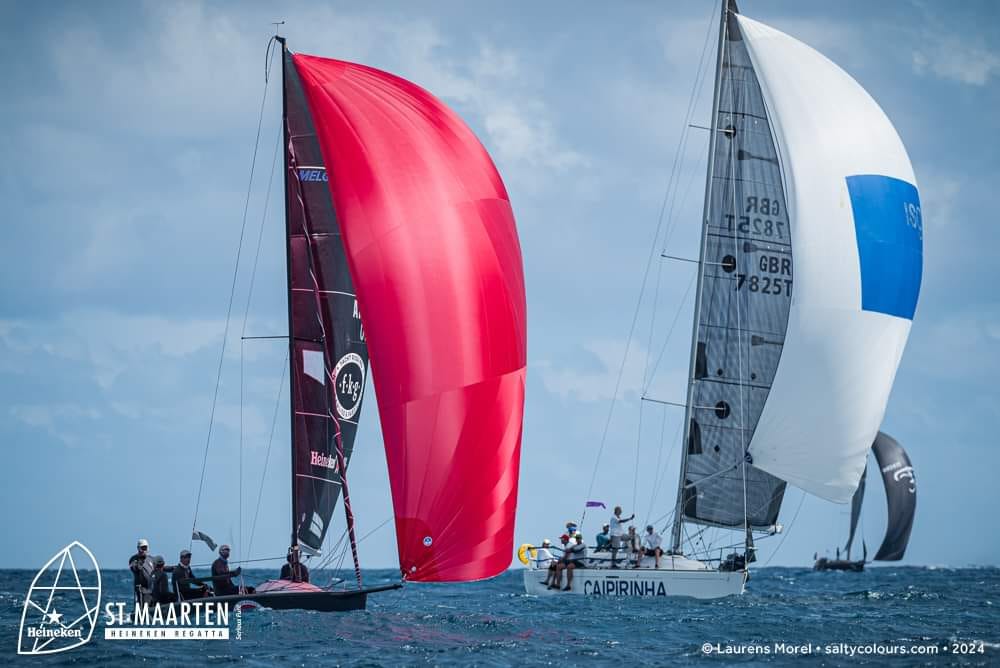
Everyone tells you racing sailboats offshore requires trusting strangers. True. What they sometimes omit is that you have to trust them immediately—before you’ve seen them handle anything difficult, before you know if they’ll stay cool when things go sideways, before you’ve even met them—while simultaneously hoping the whole crew gels before anyone’s weaknesses get exposed.
These aren’t your college buddies. These aren’t the crew you sailed with as a kid. These are people who found your name on a crew board and called you up and said, “Hey, we need an extra guy for this regatta. Can you make it to the Caribbean?”
And you said yes because—well, because you’re an idiot, because you love the sport that much, or because you thought it might be a nice vacation.
In which case: bad idea. This is not that kind of trip. Probably all three.
I’ve been thinking about that week because it mirrors something I’ve been going through recently: job hunting in 2025.
You show up looking competent. You’ve got the resume, the experience, the references. You’ve sailed before—maybe not this kind of sailing, maybe not in these conditions, but you know what you’re doing. On paper, at least.
And then someone corrects you. Or the wind shifts. Or the company decides mid-process that actually, the budget disappeared and the strategy changed and sorry, we know you talked to the CEO and did the case study and we called your references, but we’re going with someone else.
Auto-reject. No explanation. Thanks for playing.
I spent 15 hours on a case study earlier this year. They said “no more than 4-6 hours,” which translates to: spend 4 and you’re average, spend 10+ and pretend it took an afternoon. I analyzed 4,000 rows of onboarding data, diagnosed the drop-off points, tore down their product with screenshots, and presented an AI integration strategy for an hour and a half. The hiring manager told me it was great. Loved it. We’re calling your references.
A week later: auto-reject email. No call. No explanation.
Reading between the lines, it was probably a budget thing. But they didn’t say that. The goalposts just moved. And I’m still here, still looking, still showing up to interviews where the criteria keeps shifting and no one will tell you what actually matters.
It’s brutal. The hardest part is getting comfortable operating inside uncertainty you can’t control. Truly living in the moment in the worst way.
Back on that boat in St. Martin, trust happened through repetition. Clean tacks. Clean gybes. Someone calling the wind shift before I saw it, and me trusting them enough to adjust without questioning. Me releasing the sheet at the exact right second, and the bowman nodding because we nailed the douse.
By the end of the first race day—four races in—we’d found our rhythm. I understood their sense of humor (gotta love dry British wit that occasionally veered inappropriate), their intensity, when they were serious versus when they were just giving each other shit. We took the work seriously without taking ourselves too seriously, which is the only way racing works if you want to actually enjoy it.
Also: I got horrifically sunburned on day one because I forgot to reapply sunscreen like a responsible adult, and I spent the rest of the week looking like a lobster while collapsing into bed at 8:30 PM watching Avatar: The Last Airbender because I was too exhausted for the after-parties.
That’s the part that doesn’t make it into the highlight reel. The part where you’re just... tired. Showing up again. Doing the thing even when your knees hurt and you’re not sure it’s worth it.
But it was worth it. We podiumed, attaining 3rd place overall for our class.
We earned each other’s trust through proximity and repetition and showing up when we didn’t have all the answers yet.


I could’ve written this as “Five Lessons Sailing Taught Me About Product Management,” complete with bullet points and inspirational takeaways. That version would’ve been easier. Probably better for engagement.
It also wouldn’t have been true.
Sailing doesn’t teach Product work through tidy metaphors. It teaches you by making you sunburned and uncertain, and then asking whether you can still operate well anyway.
These days, I think less about whether I’m doing everything right and more about whether I’m operating well.
Product work doesn’t happen in stable conditions. Requirements shift. Constraints change. Teams inherit problems they didn’t design. Waiting for certainty usually means you’ve already missed the window.
What matters is how you show up once you’ve already said yes.
Do you listen when someone corrects you?
Do you adjust without defensiveness?
Do you keep the work moving when the conditions change?
Sailboats don’t wait for certainty. Neither do product orgs.
You commit. You pay attention. You make clean decisions with the information you have.
And over time, that’s how trust actually forms.
If you’re navigating your own version of that uncertainty—product work, the job market, or something else entirely—I’d love to hear your story.
— Duff
For readers who want to know what I’m building beyond the writing:
Expedition MS is a nonprofit I’m working on that uses sailing expeditions and storytelling to support people living with MS, their families, and others navigating chronic illness or complex grief.
We’re early. We’re listening. And we’re slowly building toward our first expeditions.
If that resonates, learn more at expeditionms.org, or DM me here.